Today’s poem comes to us from Catherine Harren Barufaldi. An untitled haiku, its brevity does nothing to diminish its power, or the stark contrast it makes against what we’re fighting.
Mine will be just fine, he said. Not enough for me Since they are all mine.
Author: Catherine Harren Barufaldi. All rights reserved.
*****
For the first 100 days of the Trumpet administration, this blog will feature a new poem of protest, by my own hand and by others. They will be polished gems, or rough cut drafts of rage, or in process pieces searching for peace. They may be haiku or tanka, limericks or lyrics, verses free or fettered. If you would like to submit to this endeavor, please send an email, with poem saved as a word document (.docx) to waxyandpoetic AT gmail DOT com. All rights remain with the author. Please address any formatting preferences in your email. I will post submissions time permitting, with at least one per day. Editing will be limited to obvious errors of spelling and the like.
Read, follow, share, submit, live, love, spread light! Don’t forget to use #100Days100Poems !
Lawrence Ferlinghetti once said that “The state of the world calls out for poetry to save it!” It couldn’t be more true as we transition from an administration of inclusion to one of exclusion, from hope, in all its ugly, forward moving jerks and stops, to dope, in all its backsliding reversals of progress.
For the next 100 days, this blog will feature a new poem of protest, by my own hand and by others. They will be polished gems, or rough cut drafts of rage, or in process pieces searching for peace. They may be haiku or tanka, limericks or lyrics, verses free or fettered. If you would like to submit to this endeavor, please send an email, with poem saved as a word document (.docx) to waxyandpoetic AT gmail DOT com. All rights remain with the author, Please address any formatting preferences in your email. I will post submissions time permitting, with at least one per day. Editing will be limited to obvious errors of spelling and the like.
This marks a return in a blaze of glory. Please share it with #100Days100Poems . Tweet it! Share it on Facebook! Rock it on Reddit! Use the media to make our voices heard!
With that, in solidarity, I present to you the first poem.
Election Hangover Blues
And so then I woke on 11/9
which really was 9/11 for the rest of the world
and the skyscraper gambler
had won the biggest pot of all
his great gray bluff never called
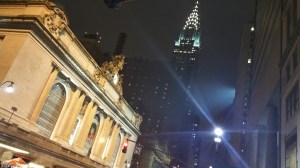
And Manhattan’s metal and glass menagerie
wasn’t as gray as that sky’s November mourn
And in Main Street America crosses were burning
swastikas blooming
kindergarten classrooms echoing “Build that wall!”
neither legos nor Lincoln logs in sight
hijabs left on dressers, sexuality re-closeted
whole families now fearing piecemeal meals
moms & dads soon to be deported, kids & kaboodles
soon to be deposited at some charitable shelter
And Lady Liberty, old gift of France, on her Liberty Island
torch long lain down
holds instead another cadeau de la France:
chrysanthemums, white, bunched in fisted bouquet
tear drops plop on petal after petal after petal
the “she loves me /
she loves me not”
replaced by
in memoriam
repose en paix
in memoriam
repose en paix
in memoriam
repose en paix
And then on 1/20, being 20/1 to the rest of the world
(and not 21, that legal drinking
age for those puritanical Americans)
all those new voters who can’t drown their sorrows in
Kentucky’s Best Bourbon
and all those old voters who’ll be passing the bottle and the buck and the bullshit
all corralled near K Street for the
Napoleonic Coronation (did he hold the Bible himself?)
the world held its breath
the climate’s climes climbed a little higher
and the protestors protested
tired people burning trash cans & tires
stuck people throwing rocks from their hard places
Starbucks & car windows struck with bricks & braggadocio
as there were parties & galas & lunches to disrupt
And on the mall at Lincoln’s feet
rain rain rain
rain is “the Earth crying about the climate denial president”*
But it wasn’t just the earth crying
& crying out
the real America filling the streets of the real capital
signs & slogans, posters & chants
“Reject!”
“Resist!”
“Not Our President”
“Putin’s Orange Puppet”
Russia’s Nesting Doll
“Not Our President”
“Resist!”
“Protect!”
“Not Our President”
but our rapist in chief, conman & thief
Not Our President
& “When our communities are under attack
we are going to fight back.”**
the poetry of protest
“Rage Rage Against the Dying of our Rights”
long long into this dark night in democracy
rage & rage & rage & rage
Not Our President
Not Our President
Not Our President
NOPe
Nope
nope
*E. Huttner & ** R. Kudaimi — quotes taken from NY Times news updates covering the inauguration
The Guggenheim Museum here in New York City recently closed a wonderful retrospective of the Swiss artist duo of Peter Fischli and David Weiss. For those unfamiliar with their work (as I was), I suggest reading this from one of the Gallery Guides who posted on the Guggenheim Museum’s blog. Explore the site further to learn more about the exhibit.
One of the things that struck me about the retrospective was the infectious sense of play that clung to the works and also influenced museum goers of all ages. You could hear laughter and sighs of contentment, bursts of Aha! as jokes or visual puns sunk in; the entire space was filled with the buzz of people not just talking and reacting to the art, but feeding off its energy and fun. I’m currently working on a poem that more directly deals with the themes of Suddenly This Overview and some of the popular opposites that emerge there. But this present blog post comes inspired by a completely different piece in the exhibit, the Large Question Pot (1984), an enormous painted polyurethane and cloth vessel, filled with dozens upon dozens of questions on the inner wall, written in German in various colors.
In keeping with the theme of play (and, in some cases, the juxtapositions found in popular opposites), I wrote answers to some selected questions that the curators translated for the exhibit. These answers, at times short poems, or even poetic bits, or simply sharp responses, were written in quick bursts, as the muse struck, with no rhyme or reason necessarily to unite them, other than the poetic exercise itself. At some point I’d like to find translations of all the queries inside Large Question Pot (my German being, well, non-existent), to continue exploring what Fischli and Weiss bring out of me with their work. Until then, you’ll need to be content with these selections.
In an effort to switch things up a bit, the poem for this post,
“Picasso the Sculptor Sculpting Sculptures Scrupulously and Scrappily in his Workshop”
will simply be presented as audio, with a gallery of photos showing some of the works mentioned in the poem. A post at a later date may include the text of the poem.
The Bathers, incl. Woman Diver, Man with Folded Hands, Fountain Man, Child, Woman with Outstretched Arms, Young Man
"Midnight" Plays mid-night in the Middle of the Cacophony of a Bar I Frequentfor Tommy
So it was late one night in a sports bar &
restaurant, the kind where the TVs are shiny black &
hi-def & numerous, hanging on walls like finished
framed tableaux in an artist’s studio, displayed
for the visiting curator who may or may not buy any of these
finished pieces, but they’re showing all the highlights of our modern-
day mass entertainments with the red & white team
gunning past the blue- & white-striped lads playing the foot
ball you play with your feet & another screen
with the blue & red guys smashing the black &
silver fellows while they battle for the football you handle
with your hands & on another screen the orange ball is stuffed in a hoop
& on another the stick hits the white ball & you can almost
hear on another screen the grunts & racket of shuffling ladies from one
side of the clay court to the other & there’s
no sound from any of these screens, the aforementioned
sports bar opting to pump popular hits through the speakers
& I’m sitting there, flanked by friends,
fringed by friends of those friends & on the speakers
I hear A Tribe Called Quest’s “Midnight” & everything
around me stops & I’m suddenly whisked back over 20 years
to that night in my car where the CD player kept
playing track after track on that album & our heads
were nodding in unison & in synch we both bust out with
"Intensity, most rappers don’t see it / Spirit wise,
musically you gotta be it!" & I reach to turn down the volume
& we both look at each other to agree that even then we
felt a crisis in hip hop coming on & that our favorite
emcees & DJs weren’t getting the attention & accolades
they deserved because lesser cats with weaker raps were easier to play
on the radio & thank goodness we could hit the
track back button & hear “Midnight” again or turn
to “Award Tour” as an apt send off as we leave the parking lot
behind the theatre & turn north to take you
home.
& it’s late in this sports bar & I think
		how long you’ve been gone & I try to remember our
	last conversation as I replay in my mind the montage
sequence of how we lost touch after leaving junior college
	& phone calls every couple of months changed to a couple
		calls a year & how we used to see each
	other every day & had lunch together often &
how we used to play the dozens between classes &
	before rehearsals & never worrying for one second that
		your your momma jokes or my momma jokes would cut
	to the quick & I think now that subconsciously
I carry on these quick quips with my sister & friends &
	co-workers in a nod to your absence though no one
		ever has the comebacks you did & some lack the good sense to
	remember it’s all in jest & just as “Midnight” starts
its second verse here in this sports bar with the blonde bombshell bartender
	whose bright white smile reminds me of yours I think about
		how great it’d be for you to be in the chair beside me
	egging me on to flirt with said bartender inflating the
courage & the ego in me the way my tall beer wouldn’t &
	I wonder if you’d be surprised at the intro-
		vert I’ve become & my tendency to sit quietly &
	observe & be Q-tip’s nocturnal animal & I think if
you were here we’d think about putting some poetry to a
	beat & then I remember that time listening to
		Guru rap about it being “Mostly Tha Voice” & you looking at
	me to say I had the voice & laughing & pumping
your fist before giving me a high five & that night is on
my mind, the night is on my mind, the sun’ll still
	shine.
		& I remember I’m stuck in this sports bar late
	on a Sunday night & I’m two beers & two shots in, but
no one knows I’m back in that godforsaken East Texas
city pulling my own CL Smooth reminiscing over you because
	A Tribe Called Quest called you back from
		the past & here I am in that sports bar thinking
	how Boyz II Men told us how hard it would be
& how hard it is now to think that I never
	really told you & despite all these TVs &
		the eye-catching blonde pouring another pint, the night
	makes the aura, the sports bar the soundtrack & outside
the way the moon dangles in the midnight sky
and the stars dance around, hey yo I think it’s fly
	& I think the memory has that intensity, & I nod my head, still
		in unison to yours, thinking you’ll see it,
	knowing you’ll see it, & then I slow down as
the song fades into some more current obnoxious hit
and that night's on my mind
the sun will still shine
but that night's on my mind
& you still shine
and that night is on my mind
the night is on my mind
the night
This poem contains a line, and plays with other lines, from the song "Midnight" by
A Tribe Called Quest.
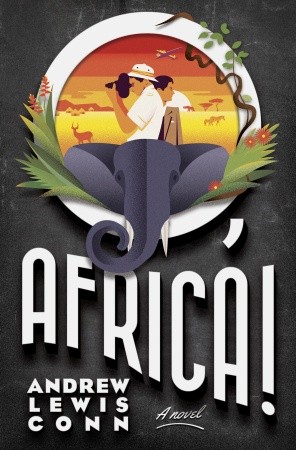
With “O, Africa!,” Andrew Lewis Conn has given us a hilarious, surprising, touching novel set in the late Twenties, during the transition from silent films to talkies. The story follows a pair of film makers, twin brothers, Micah and Isidor (Izzy) Grand. Micah, the brash, bold, and risky one, is the director; Izzy, the cinematographer and editor, is more reserved and unassuming, preferring to see the world behind the lens and in the editing room. The novel opens with the duo finishing a film shoot in Coney Island, teaming up their star comedian, Henry Till, with the legendary, even in his time, Babe Ruth.
From there the curtains rise, revealing a cast of characters that will intrigue and delight you until the final page, including Arthur Marblestone, the founder and president of Imperial Pictures, thus employer of Micah and Izzy, who finds himself over his head in debt; Micah’s mistress, Rose, a light-skinned woman from Harlem, and her younger brother, Early; and a collection of unsavory criminal types with whom Micah’s gambling habit creates his own set of economic problems.
In due course, Marblestone devises a sure-fire scheme to end the financial woes of Imperial Pictures, and enlists the help of the Grand brothers. Micah, clever and resourceful as ever, warms to the idea as he sees the potential for improving his own situation. The company president sends the filmmakers, along with a tiny cast-and-crew combo, including Henry Till, to Africa, where they will film a new comedy and collect as much stock footage as possible, which Marblestone hopes to sell to other production outfits, putting Imperial Pictures back in the black. Through this unlikely journey, we are witness to several grand and glorious love stories: of two brothers for each other, for cinema as art and as work, for those closest to them, and those they meet along the way. All the while, they come to terms with the racial attitudes of their times, the changing and growing Hollywood industry, and their own strengths and weaknesses.
Mr. Conn has not simply delivered to us an engrossing narrative, but he’s done so with vibrant, pulsating, read-it-out-loud language. There is humor coursing through the pages; your laughter will be so audible the other passengers on the train will likely glance at you sideways with concern. There is also much tragedy, and your gasps will gain you the unsolicited offers of an inhaler from compassionate asthmatics.
One of Conn’s most effective tools for drawing us into his language is his manner of listing, giving a catalog of images or descriptions to fill the reader’s imagination with the world he’s created. Early in the novel, while trolling for a place to use the restroom,
Micah takes in the passing parade of women with parasols and men in derbies, brownies, and bowler hats; brilliantined barkers and sailors on shore leave; cigarette girls and cotton-candy kids; the entire ready-made collage of movement, light, and faces.
The list, short and sharp like a good bark, asks to be read aloud as the plosive bs and the hard k sounds pulse the reader along. Such techniques also serve Conn well as a source of humor, as when Sidney Bloat, an associate of Marblestone’s, explains the history of the red carpet.
“Well, you see, the red carpet was originally implemented as a weapon; rolling out the red carpet was a battle cry, the red-carpet treatment a signal for certain death from above…because bundled inside said carpet, trundled inside said tapestry, rolled inside said rug, was a coterie of mercenaries, marksmen, private armies, jubilant assassins, soldiers of fortune, anarchist bomb throwers, a band of evil angels, and a collection of the worst, most rotten scoundrels the eighteenth century had on offer. The carpet was bad, bad, bad. And it was red….Hence the sanguine coloration.”
The alliteration, the enthusiasm of the speaker, the culmination of the repetitions, all draw the reader to laughter as one envisions a wildly gesticulating salesman delivering his little history lesson in the middle of a theatre. And the diatribe only serves as an introduction to Bloat’s even more enthusiastic description of the red carpet on which he, Izzy and Marblestone are currently standing. Laughter comes loud and often through the descriptions of Henry Till’s action on camera, or the description of Micah’s first experience with a now-legal-in-some-states herbal cigarette.
Though thoroughly littered with humor, Mr. Conn has also infused his novel with heartbreak and longing, life and death. At the risk of saying too much, giving away even more of the story, or the risk of saying too little, overly relying on some meager quotes and my own enthusiasm’s ability to seep through cyberspace, get yourself a copy of “O, Africa!” It will speak to your inner movie buff, adventurer, voracious reader, or prose interpretation performer. Your shelf, and the investigating eyes of houseguests will be much pleased with this addition.
After a much too lengthy hiatus from the Waxy&Poetic blog, I’m back to continue with regular posts. Since I was AWOL during National Poetry Month, feast your eyes on the collected haiku that were daily posted on Twitter during April.
Until next week, enjoy!
*****
After one drink, I’m honest with others. After
a few, with myself.
*
my original:
Au bord de la Seine: bouteilles de rouge vides,
trop de lumières.
and my own translation:
On the banks of the Seine: empty bottles of red
and too many lights.
*
I know for whom the Bell tolls: Zack, Kelly, Jessie,
Screech, Slater, Belding.
Lisa discovers her Twitter snub. She reaches
for the bathtub gin.
*
Absence of haikus does not denote haikus of
absence, but silence.
*
in the pine box: one hand-scribbled obit, Miles on
vinyl, one corkscrew.
*
Alone in bed and smelling your pillow. My hand
feels nothing like you.
*
rope hanging above the desk: dusty. noosed. strong. still.
long stretch, deed long done.
*
a tanka:
Elevation: six- teen hundred nine meters. The
air’s thin and cool, but
not the reason I cannot
breathe. Denver. Pop. minus one.
*
Billets doux, sonnets— stuffed to closet-box-bottom
for want of a match.
*
This is a test of the emergency haiku
system. Don’t panic!
In event of real poetic emergency:
Sound the Bard aloud.
In event of real poetic emergency:
Eat that violin.
In event of real poetic emergency:
Seek out Big Mamma.
In event of real poetic emergency:
Mimic Whitman’s breath.
In event of real poetic emergency:
Get hysterical.
In event of real poetic emergency:
Starving minds should feed.
In event of real
poetic emergency:
yawp naked, tromp clothed.
In event of real poetic emergency:
Risk absurdity.
In event of real poetic emergency:
Address the reader.
In event of real theatrical emergency:
Shatter the fourth wall.
In event of real artistic emergency:
Collage with newsprint.
In event of real poetic emergency:
Read Ferlinghetti.
*
[this is not my time]
America, present day
[this is not my place]
*
Mountains echo the wailing; beached sands dry the tears.
Earth is unhappied.
*
I’ve cultivated a discerning palate,
but no taste for your loss.
*
Democracy speaks: Receive your voice when you make
fat contributions.
*
I’m not an object of desire, just an object
not for collecting.
*
Hello. Hello. What do you do for a living? Read novels & dreams.
& you? What do you do? Nothing so noble. I
rouse disappointment.
*
a final tanka:
sitting on bus bench my eyes alert, Canon in
hand. Kid next to me asks
“What’s with the camera?”
“I write poems the hard way.”



 Waxy & Poetic